My younger sister, Shelby, is wonderful. She's a beautiful, kick-butt tennis player with an enviable set of locks and ice-blue eyes. She has a sharp sense of humor and is extremely intelligent to boot. But perhaps the best thing about my little sister is her ability to say, think, or write completely mind-boggling nuggets of comedic gold. Sometimes her humor is intentional, and sometimes it isn't, but whenever I need the best kind of pick-me-up there is, I talk to Shelby, and invariably end up with a hardcore, laughter-induced ab workout. Her pearls of wisdom are legendary in our family, and here, for popular enjoyment, I have gone through some of my virtual records and compiled a short "Best of" list. These conversations take place with me, my parents, and my siblings, for the most part; some have dubbed these Shelbyisms, I call them magic, but whatever you call it, here is a glimpse into Shelby's incomparable, delightful noggin, published out of love and missing her...
--after arriving at her hotel for a tennis tournament--
Shelby: "The taxi driver told me all about Hammond, as well as the fact that his aunt was a rocketeer, and she got kicked in the shin during practice and then she died."
Dad: "Do you mean Rockette? That's the dancer. A rocketeer goes up in space."
Shelby: "Yeah! Rockette!"
Dad: "Oh, dear."
--discussing her weekend plans--
Shelby: "It depends where we meet up, then we'll sleepover at whoever lives closest. Everyone's kind of in the same area...like if we're in the city we'll sleep at her house, or if we're in Staten Island or Long Island, someone else's..."
Mom: "Then everyone doesn't really live in the same area, do they?"
Me: "When Shelby says the 'same area,' I'm pretty sure she means 'planet Earth.'"
Shelby: "Well..."
--writing a report on Dracula--
Shelby: "Wasn't Dracula written by Shakespeare? Wait...Dracula was a book, wasn't it?"
Me: (mouth agape)
Dad: "No. No. No, honey. It was Bram Stoker."
Shelby: "What?! It would be something he would write! I think if it was written by Shakespeare, it would have been much better, no offense to Brams Stoker or whatever his name is..."
--after a tennis lesson with her coach--
Shelby: "I was talking with Parsa, and he told me that tennis was 'uno et uno'."
Dad: "You mean 'mano a mano'?"
Shelby: "That's the one."
--after seeing a Royal Danish Ballet promo video clip I was in--
Shelby: "Oh my god, that's such a seductive picture. She's attempting to have sex with the camera."
--discussing her travels to a tournament--
Shelby: "So this morning, I found out that Facebook IS a sufficient form of I.D. while going through the airport security. (The lady liked my picture.) Solid."
Dad: "We are SO losing the War on Terror . . ."
--a Facebook post left on my wall--
Shelby: "I had a dream today where you and Dylan were sharing an apartment in the city. The apartment was underground, so when you walked through the door there was just a small entryway and then stairs that led to the living area. I was at the entryway and you and Dylan were in the living room. All of a sudden hundreds of medicine balls just fell through the ceiling! They blocked my path to the living room so I pushed all of them down the stairs and walked down. You and Dylan wanted me to leave because the ceiling was probably gonna fall down, but my black uggs were in the medicine ball pile and for some reason I needed them. So I went and found them, and I tried to find my pink tennis sneakers but I could only find one so I gave up. Then I met you guys back down in the living room, and Dylan and I made you clean up the medicine balls."
--discussing my dog's unfriendliness towards small children--
Shelby: "I wonder how he'd deal with, like, a 30-year-old midget?"
--an average family discussion--
Mom: "We should have named Shelby 'Belle.' You know what that means?"
Shelby: "Yeah, it means BEAUTIFUL! So fitting."
Finbar: "Ha! more like...bootyful!"
--chatting about our father's high school pictures posted on Facebook--
Shelby: "Out of all the pictures, the one of dad as a teenager gazing into the distance like he's a wannabe model...classic."
--a particularly epic Facebook thread between my siblings and I--
Shelby: "TEAM JACOB! We are not just people. we are human beings. And we have names. And occasionally feelings."
Dylan: "I would be embraced as the Alpha wolf because they would believe me to be a wolf god for having survived living with you for 17 years. Also these wolves would hate Twilight and anything associated with it because they have taste."
Me: "Shelby--see, used your name--I gotta give Dylan--second name!--the win. That comment was gold."
Shelby: "Do they drink wine with their pinky's out too? Classy. And Carling...I don't lose."
Dylan: "Clearly you haven't been educated on wolves because you would know they don't use their paws to drink...let alone pinky's."
Me: "No apostrophe, Shelbs. Pinkies. And don't be ridiculous. Wolves don't have opposable thumbs. Or real fingers. They couldn't grip a wine glass."
Shelby: "...how am I even related to any of you?"
Dylan: "That's a good question, Shelby. I asked Mom how you were related to me after you hatched."
Me: "One word, Shelbs: FedEx."
Dylan: "Awesome."
Shelby: "I always knew I came from a higher being...this explains everything. Thank you, Carling."
--chatting about Denmark--
Shelby: "I was looking at tournaments to go play near you. THERE'S ONE IN DENMARK! But it starts tomorrow."
Me: "Get on a plane!"
Shelby: "There's actually not one other upcoming tournament near you...but then again, my geography is terrible. So I could actually be completely wrong."
--doing a report on a saint--
Shelby: "I have to do a report on a saint...I have Mother Nature."
Dad: "You mean Mother Teresa?"
Shelby: "Yeah yeah, her!"
Dad: "Oh my god."
--miscellaneous chat conversations--
Shelby: "Whenever I click on the screen, I look and it says 'dad' so I feel like Dad for a second, and then I realize that it's me talking...and sometimes, I actually do want to talk to you. And you're semi-anti social so you hide yourself on AIM, and I'm not sure how to contact you because I can't see you on my list, so I sit and I send you mental messages, 'stop being invisible' or 'IM Shelby Talcott.' It never works."
--on what makes her feel like an athlete--
Shelby: "The fact that I'm homeschooled, travel all the time, and train in California doesn't make me feel like an athlete. But this smoothie with protein in it? Yeah. That's legit...anyway, so I was just thinking...if bones didn't exist, we'd all be like so jiggly."
--reporting from the homeland--
Shelby: "So we were watching 48 Hours Mystery, and it was the beginning and the guy was like, 'Next up on 48 Hours Mystery: a loving wife and mother is found drowned. Could it be the husband's fault?' and then we're all just chilling and Mom goes, 'This show is usually about killing spouses...Shelby take notes...' and then continued eating her grapes like nothing strange had been said. Dad and I exchanged a 'Whaaaat?!' look, and then the awkward moment was apparently put to rest...I'm still not sure why she said it..."
--attempting to cook--
Shelby: "So apparently I have to put the chicken in the oven, and STIR THE RICE on the stove. So much effort for something that I'm going to eat within 3 minutes, possibly 2."
--geography lessons--
Shelby: "What's the biggest state?"
Dad: "Alaska."
Shelby: "What's the smallest state?"
Dad: "Rhode Island."
Shelby: "Rhode Island's a STATE?"
Dad: "You're kidding, right?"
Shelby: "Yeah. Let's go with that."
--history lessons--
Mom (after Shelby described a horrible day): "Other than that, Mrs. Lincoln, how did you like the show?"
Shelby: "Who's Mrs. Lincoln?"
--writing gift tags for Christmas presents--
Shelby: "Do I use an apostrophe after Talcott?"
Dad: "No, it's plural, not possessive."
Shelby: "Well, we own the gift . . . "
--eating Chinese food--
Shelby: "I CAN'T EVEN GET THE FRIGGIN' NOODLES FROM MY WONTON SOUP BECAUSE I'M USING THIS STUPID LADLE THING THAT THEY GAVE ME. SO DO NOT START WITH ME ON DAYS FROM HELL. I'M SERIOUS. It's so frustrating. I finally got a huge ladle filled with it, and IT FALLS BACK DOWN INTO THE SOUP."
--sisterly advice--
Shelby: "So. I listen to your list of good things/bad things. (Hint: it goes on forever). I give you possibly the most amazing advice slash short piece of literature that my mind has ever come up with in my long 16 years of life. It's a short step down from Shakespeare, that's how good it was. And then you leave the chat!"
--on difficulties "Facebook stalking" me--
Shelby: "I went to go Facebook stalk you, so I typed in "c" for Carling. Then, all of a sudden, I forgot your name and who I wanted to Facebook stalk. But then I remembered."
--going out to eat--
Shelby: "Mmmmkay this lady gave us the check already and what if I want dessert huh? She just wasted a tree."
--one of the ultimate Shelbyisms, on punctuation--
Shelby: "For a second I was like OMG how did she get the periods to go under the lines, that's so cool! And then I realized that they were just exclamation points, and I felt a little bit stupid."
Monday, March 21, 2011

Sunday, March 6, 2011
Et Folkesagn
On Friday, we premiere the new version of Bournonville's classic Et Folkesagn ("A Folk Tale"). With stunning new sets and costumes by Mia Stensgaard, the ballet is visually amazing. The story--to this American, at least--is another matter. Even for a ballet fairy tale, this one is far-fetched; I found I had to tweak very little from the basic summary to convey the funny nature of this Folk Tale. And so, without further ado, a synopsis...
ACT ONE
The sophisticated but emotionally fickle (read: moody; possibly cray-cray) Miss Birthe, from the posh Danish estate of Højgården, has ordered lunch to be served in the woods of her property. These woods are very near to a legendary hill that is said to be a hiding place for local trolls. (Because trolls live in Denmark, and their preferred dwellings are the interiors of small dirty mountains.) Birthe's maids are preparing the table for their nightmare of a boss, while some local peasants--who, for the record, clearly haven't bathed in a while, just saying--play around in front of Troll Headquarters. The head housekeeper sees the peasants' frivolity and is not happy about it. She stops their monkeying around, because everyone knows it's all fun and games until someone pisses off the trolls in the hill.
Then Birthe arrives to inspect the peasants and the lunch table setting. She is a whip-wielding charmer, scaring the crap out of the trembling peasants and throwing a veritable temper tantrum after tasting the wine. But there is no time to waste, since her stuffy, wealthy, sticks-in-the-mud group of guests is arriving, so what's been set out for lunch will just have to do. Among the guests are Birthe's fiancee, the handsomely bookish Junker Ove; and the social climbing, flamboyantly smarmy Copenhagen theatre director, one Herr Mogens. The peasants dance for the guests, and Herr Mogens' troupe from Copenhagen provides further balletic entertainment. Birthe loves to dance and is enchanted; ballet is apparently one thing that won't set her spiraling into a maniacal rage. The ladies who lunch and their equally stuffy husbands are disgusted by the peasants' shabby appearance, strange folksy dance moves, and general stench. They take it upon themselves to indulge in some proper, stiff, socially acceptable dancing, at the suggestion of their outrageous hostess. So far, Junker Ove has been pretty cold to his more-than-hormonal fiancee, who in turn, has been openly delighted by Herr Mogens' presence. Birthe dances with Herr Mogens the whole time, shocking her guests with her vulgar behavior: exposing her ankles, swinging atop a horse's saddle with her legs splayed, dancing so scandalously with a man who is definitely not her betrothed. The horror! At dusk, Birthe invites the party back up to her estate; when she offers her hand to Junker Ove, he basically says, "Look, B. You're crazy. I will never be with you." She's not too broken up about it, though, and takes Herr Mogens--who can see the excellent financial benefits of putting up with Birthe--and her guests back to her place to continue the festivities. Junker Ove stays behind, reading in the dark woods. Which was probably difficult.
Anyway, all of a sudden the hill opens. Turns out the stories are true: the sorceress Muri and beautiful mountain girl Hilda lead a motley crew of underworld creatures to the surface. Hilda approaches Junker Ove to offer him a drink from her goblet. Junker Ove is distracted by Hilda's beauty and accidentally pours the goblet's contents to ground...at which point the liquid bursts into flames and Junker Ove realizes the mountain glamazon was trying to off him. He refuses to give back the goblet despite Hilda's pleads; she tries to tell him that she was forced to offer him the fire beverage, but Junker Ove is not having it. Hilda and an infuriated Muri disappear as the hill closes. Dangerous elf girls appear, whirling around the exhausted--and, let's face it, probably totally confused--Junker Ove, trying to retrieve the goblet. They don't get the cup back, but they do manage to drive him into a state of insanity. Mission half-accomplished.
ACT TWO
Muri's sons, two trolls named Diderik and Viderik, are fusing pieces of gold jewelry for Hilda--with whom they are both in love, which causes some brotherly tension, natch. Viderik is the sweeter of the two, and so of course Mommie Dearest Muri has decided Hilda must marry her oldest son Diderik, whose personality is more acceptably...trollish. Hilda is just not that into Diderik; and Viderik is totally crushed, so he runs away while Hilda has fallen asleep. In her dreams, a strange vision appears about trolls mixing up two babies. The handsome Junker Ove and the goblet appear also. She wakes up and probably thinks something along the lines of: "Duh! Of course this explains why I'm the only sweet, hot one in this mountain! I was switched with a troll baby at birth!"
Meanwhile, Muri has invited all the trolls to an engagement party for Hilda and Diderik. The hill's most distinguished creatures attend the noisy, boozy event: the light men; vampire girls; the dead animals; the headless giant (with his detached head in tow); and many others. Hilda performs for this...peculiar audience, and once they have worked themselves into a fine drunken frenzy, she and a dismayed Viderik escape the trolls together.
ACT THREE
Back in Denmark, the harvest work is done and now the farmers are seeing a preacher who can apparently cure the sick. Hilda and Viderik come upon this crowd, and Hilda--who seems to dance whenever she doesn't know what else to do--performs for them. The farmers are in awe of her dance, and Herr Mogens, who has been watching from afar, is taken aback by her beauty. She might be even hotter than that sack of crazy, Birthe, plus maybe she's not crazy! But the general atmosphere of enthusiastic male drooling dies down when Junker Ove (literally) stumbles in, still suffering the hallucinating effects of the elf babes. He is still--somewhat impressively, two acts later!--holding that damn goblet, but finally drops it. Hilda recognizes him as the studmuffin from her dream. She picks up the goblet while slowly bringing him back to sanity and life through her dancing. And her hotness. Hilda gives Junker Ove his sanity back, and he recognizes her as the mountain babe. They are flaunting their joy of being reunited, somewhat insensitively, since poor old Viderik watches some handsome dude steal his lady love. Herr Mogens, meanwhile, is not happy about this unwelcome intrusion on his plans to inherit Højgården via an advantageous marriage. He organizes blue Gendarmes to hunt down Junker Ove, on grounds of insanity, and the intruding company (aka, Hilda).
In the meantime, Birthe is madder than ever. Her maids refuse to obey her. (Personally, I don't blame them. The woman is a nightmare who abuses her handbell. She would drive anyone completely bonkers.) Her already-fiery temper is reaching a (surely record-breaking) boiling point, and in a rather unbecoming fit of hysteria she faints. Just after Birthe's dramatic collapse, Hilda arrives, holding the goblet. She is recognized by the housekeepers and maids as the true heiress to Højgården. Birthe wakes from her tantrum-induced stupor to find she has been living a lie her whole life: she is, in fact, the real troll daughter of Muri, and is expelled from the estate.
In an attempt to find help from Herr Mogens and his peers, an enraged Birthe approaches them...only to realize they are all bewitched by grains thrown upon them by Viderik, who is apparently drowning his romantic sorrows in carbohydrate-centric pranks. Birthe forgets her rage when she lays eyes on the amusing scene--oh, she is just on an emotional rollercoaster at this point--and fairly immediately falls foul with Viderik, who has recognized her as his sister. Muri and the rest of the troll family turn up to welcome their long-lost family member. But Birthe has no intentions of following them to ther hill; she's sort of used to a decidedly cushier lifestyle by now, so I get this. Muri has an idea. A wheelbarrow full of treasures persuades the greedy Herr Mogens to take "troll for gold." Birthe, who is all about drama and theatre, doesn't care that her flesh and blood and fur totally just dumped her, because now she can finally have her dreams come true: she will be the newest star in Herr Mogens' Copenhagen theatre troupe.
Back at the estate, people are delighted. They've gathered for a summer wedding, between Junker Ove and Hilda. Even the rich people have relaxed a bit: gone are the neck-high lace aprons and outrageous hats for the ladies; and the men have even dared to show some spunk and (gasp!) roll up their shirtsleeves. The dancers from Copenhagen provide entertainment, including the recent addition of Birthe, while Junker Ove and Hilda waltz into summer light of wedding. And the trolls remain at their native soil--after all, according to the official synopsis, "one could not do without them...could we"?
ACT ONE
The sophisticated but emotionally fickle (read: moody; possibly cray-cray) Miss Birthe, from the posh Danish estate of Højgården, has ordered lunch to be served in the woods of her property. These woods are very near to a legendary hill that is said to be a hiding place for local trolls. (Because trolls live in Denmark, and their preferred dwellings are the interiors of small dirty mountains.) Birthe's maids are preparing the table for their nightmare of a boss, while some local peasants--who, for the record, clearly haven't bathed in a while, just saying--play around in front of Troll Headquarters. The head housekeeper sees the peasants' frivolity and is not happy about it. She stops their monkeying around, because everyone knows it's all fun and games until someone pisses off the trolls in the hill.
Then Birthe arrives to inspect the peasants and the lunch table setting. She is a whip-wielding charmer, scaring the crap out of the trembling peasants and throwing a veritable temper tantrum after tasting the wine. But there is no time to waste, since her stuffy, wealthy, sticks-in-the-mud group of guests is arriving, so what's been set out for lunch will just have to do. Among the guests are Birthe's fiancee, the handsomely bookish Junker Ove; and the social climbing, flamboyantly smarmy Copenhagen theatre director, one Herr Mogens. The peasants dance for the guests, and Herr Mogens' troupe from Copenhagen provides further balletic entertainment. Birthe loves to dance and is enchanted; ballet is apparently one thing that won't set her spiraling into a maniacal rage. The ladies who lunch and their equally stuffy husbands are disgusted by the peasants' shabby appearance, strange folksy dance moves, and general stench. They take it upon themselves to indulge in some proper, stiff, socially acceptable dancing, at the suggestion of their outrageous hostess. So far, Junker Ove has been pretty cold to his more-than-hormonal fiancee, who in turn, has been openly delighted by Herr Mogens' presence. Birthe dances with Herr Mogens the whole time, shocking her guests with her vulgar behavior: exposing her ankles, swinging atop a horse's saddle with her legs splayed, dancing so scandalously with a man who is definitely not her betrothed. The horror! At dusk, Birthe invites the party back up to her estate; when she offers her hand to Junker Ove, he basically says, "Look, B. You're crazy. I will never be with you." She's not too broken up about it, though, and takes Herr Mogens--who can see the excellent financial benefits of putting up with Birthe--and her guests back to her place to continue the festivities. Junker Ove stays behind, reading in the dark woods. Which was probably difficult.
Anyway, all of a sudden the hill opens. Turns out the stories are true: the sorceress Muri and beautiful mountain girl Hilda lead a motley crew of underworld creatures to the surface. Hilda approaches Junker Ove to offer him a drink from her goblet. Junker Ove is distracted by Hilda's beauty and accidentally pours the goblet's contents to ground...at which point the liquid bursts into flames and Junker Ove realizes the mountain glamazon was trying to off him. He refuses to give back the goblet despite Hilda's pleads; she tries to tell him that she was forced to offer him the fire beverage, but Junker Ove is not having it. Hilda and an infuriated Muri disappear as the hill closes. Dangerous elf girls appear, whirling around the exhausted--and, let's face it, probably totally confused--Junker Ove, trying to retrieve the goblet. They don't get the cup back, but they do manage to drive him into a state of insanity. Mission half-accomplished.
ACT TWO
Muri's sons, two trolls named Diderik and Viderik, are fusing pieces of gold jewelry for Hilda--with whom they are both in love, which causes some brotherly tension, natch. Viderik is the sweeter of the two, and so of course Mommie Dearest Muri has decided Hilda must marry her oldest son Diderik, whose personality is more acceptably...trollish. Hilda is just not that into Diderik; and Viderik is totally crushed, so he runs away while Hilda has fallen asleep. In her dreams, a strange vision appears about trolls mixing up two babies. The handsome Junker Ove and the goblet appear also. She wakes up and probably thinks something along the lines of: "Duh! Of course this explains why I'm the only sweet, hot one in this mountain! I was switched with a troll baby at birth!"
Meanwhile, Muri has invited all the trolls to an engagement party for Hilda and Diderik. The hill's most distinguished creatures attend the noisy, boozy event: the light men; vampire girls; the dead animals; the headless giant (with his detached head in tow); and many others. Hilda performs for this...peculiar audience, and once they have worked themselves into a fine drunken frenzy, she and a dismayed Viderik escape the trolls together.
ACT THREE
Back in Denmark, the harvest work is done and now the farmers are seeing a preacher who can apparently cure the sick. Hilda and Viderik come upon this crowd, and Hilda--who seems to dance whenever she doesn't know what else to do--performs for them. The farmers are in awe of her dance, and Herr Mogens, who has been watching from afar, is taken aback by her beauty. She might be even hotter than that sack of crazy, Birthe, plus maybe she's not crazy! But the general atmosphere of enthusiastic male drooling dies down when Junker Ove (literally) stumbles in, still suffering the hallucinating effects of the elf babes. He is still--somewhat impressively, two acts later!--holding that damn goblet, but finally drops it. Hilda recognizes him as the studmuffin from her dream. She picks up the goblet while slowly bringing him back to sanity and life through her dancing. And her hotness. Hilda gives Junker Ove his sanity back, and he recognizes her as the mountain babe. They are flaunting their joy of being reunited, somewhat insensitively, since poor old Viderik watches some handsome dude steal his lady love. Herr Mogens, meanwhile, is not happy about this unwelcome intrusion on his plans to inherit Højgården via an advantageous marriage. He organizes blue Gendarmes to hunt down Junker Ove, on grounds of insanity, and the intruding company (aka, Hilda).
In the meantime, Birthe is madder than ever. Her maids refuse to obey her. (Personally, I don't blame them. The woman is a nightmare who abuses her handbell. She would drive anyone completely bonkers.) Her already-fiery temper is reaching a (surely record-breaking) boiling point, and in a rather unbecoming fit of hysteria she faints. Just after Birthe's dramatic collapse, Hilda arrives, holding the goblet. She is recognized by the housekeepers and maids as the true heiress to Højgården. Birthe wakes from her tantrum-induced stupor to find she has been living a lie her whole life: she is, in fact, the real troll daughter of Muri, and is expelled from the estate.
In an attempt to find help from Herr Mogens and his peers, an enraged Birthe approaches them...only to realize they are all bewitched by grains thrown upon them by Viderik, who is apparently drowning his romantic sorrows in carbohydrate-centric pranks. Birthe forgets her rage when she lays eyes on the amusing scene--oh, she is just on an emotional rollercoaster at this point--and fairly immediately falls foul with Viderik, who has recognized her as his sister. Muri and the rest of the troll family turn up to welcome their long-lost family member. But Birthe has no intentions of following them to ther hill; she's sort of used to a decidedly cushier lifestyle by now, so I get this. Muri has an idea. A wheelbarrow full of treasures persuades the greedy Herr Mogens to take "troll for gold." Birthe, who is all about drama and theatre, doesn't care that her flesh and blood and fur totally just dumped her, because now she can finally have her dreams come true: she will be the newest star in Herr Mogens' Copenhagen theatre troupe.
Back at the estate, people are delighted. They've gathered for a summer wedding, between Junker Ove and Hilda. Even the rich people have relaxed a bit: gone are the neck-high lace aprons and outrageous hats for the ladies; and the men have even dared to show some spunk and (gasp!) roll up their shirtsleeves. The dancers from Copenhagen provide entertainment, including the recent addition of Birthe, while Junker Ove and Hilda waltz into summer light of wedding. And the trolls remain at their native soil--after all, according to the official synopsis, "one could not do without them...could we"?
Sunday, February 20, 2011
shine a light
Before moving to Denmark, I had very little appreciation for light or lighting design. I come from a place that, under normal global circumstances, experiences all four seasons--each for a relatively normal length of time. But unlike the motherland from whence I came, Denmark sometimes seems to have only two seasons: a very short, albeit gorgeous summer; and one unbearably long, dark, cold winter. I never had to appreciate lights before. And honestly, until a lightbulb in a lamp at home went out, I took it for granted that once I flicked the switch, the desired effect (lightbulb on or off) would be produced. I took no time to appreciate the setting in which these bulbs were placed, no notice of the fact that when executed well, lighting can be both functional and stunning.
Scandinavians, on the other hand, have learned quite well how to fully appreciate light. When you spend a good chunk of the year with infinite shades of grey providing the backdrop to your daily life, suddenly lighting design becomes something worthy of near-worship. I have come to appreciate the simple, sleek, functionally beautiful world of light. Most recently, I was introduced to the magical Ingo Maurer. A German industrial designer who specializes in light design and installations, Maurer's work is truly magnificent, and to me, demonstrates just how illuminating a bit of light can be.

A Maurer LED installation--like a blanket of stars.

I have a thing for skeletons--I'd kill for this to hang somewhere in my house one day.

Imagine this above your dining room table. When I picture that, the word "fantastic" immediately comes to mind.

I bet no one ever rained on Ingo Maurer's parade. Just saying.

Functional, check. Beautiful, check. Mission accomplished.
Scandinavians, on the other hand, have learned quite well how to fully appreciate light. When you spend a good chunk of the year with infinite shades of grey providing the backdrop to your daily life, suddenly lighting design becomes something worthy of near-worship. I have come to appreciate the simple, sleek, functionally beautiful world of light. Most recently, I was introduced to the magical Ingo Maurer. A German industrial designer who specializes in light design and installations, Maurer's work is truly magnificent, and to me, demonstrates just how illuminating a bit of light can be.

A Maurer LED installation--like a blanket of stars.

I have a thing for skeletons--I'd kill for this to hang somewhere in my house one day.

Imagine this above your dining room table. When I picture that, the word "fantastic" immediately comes to mind.

I bet no one ever rained on Ingo Maurer's parade. Just saying.

Functional, check. Beautiful, check. Mission accomplished.
Thursday, February 10, 2011
no glove left behind
In my most recent post, I shared some of my deepest, most irrational fears. I failed to include a story that my parents love to bring up at expertly chosen group events (dinner parties, holidays, etc.). I decided I would give this tragically neurotic tale a post all to itself, to stand alone in all its shining, slightly crazy glory.
I spent the first 5-6 years of my life living in Brooklyn. I loved it there--we lived in a condo in Prospect Park with high ceilings and lots of light. I shared a bunk bed with my younger brother, and I had the top bunk. I loved this because it meant I had the window that looked into the living room where, on nights I couldn't sleep, I would peek down and watch grown-up TV (which in our house was often Law & Order). Our neighbors were perfectly eccentric: the gay couple next door used to give us free office supplies from their business, cool things like triangular highlighters with a different color neon per point; Mei-Ling and her husband lived downstairs, and when she got pins in her leg after an accident, she made her leg X-rays into electric yellow tshirts for her friends, and in the process gave me my favorite pajama shirt for the next three years. (I really, really wish I still had this shirt.) I went to Catholic school several blocks from our home. Every morning on his way to the subway to go to work, my dad would walk me to school. Along the way, there was a huge, beautiful cherry blossom tree that bloomed in the spring; these days, my dad would often pick me a flower and I'd stick it in my hair, accessorizing my kindergarten ensemble. It was a fun neighborhood: most of my clothes were from the countless street fairs that would come through the area; movies and TV shows were often being filmed at a quasi-famous cafe a few blocks from home; and we had the best bagel and Chinese takeout places on planet Earth. Life was lovely, and I was a toddler. I should not have worried about much.
But then my parents let me start ballet, at a studio just a bit further from home than my school. (And when I say "ballet," I actually mean "ballet/tap/jazz/creative movement," all in one hour.) I loved the classes--the teacher was sweet, and I had my own pink bag (read: a smartly designed box-with-a-shoulder-strap) with a ballerina and the words "Ballet Bag" in flowery cursive on it. I got to wear a leotard and a skirt, and I loved jumping over the scarves and moving across the room. The actual class, once it got started, was never the problem. It was the moments just before and at the very beginning of class that proved somewhat difficult for me.
Out of nowhere, I decided that my parents had signed me up for this beautiful extracurricular activity so that they could get rid of me. (I think perhaps the four-year-old me had sneaked in one too many episodes of Law & Order.) I dreaded the moment when my mom or dad would drop me off at the studio, because I was certain that would be the last time I would see them, and that I would have to make my own way in the world, living at the studio forever, suddenly orphaned. My parents, naturally, thought I was insane, but I didn't want to quit the classes. So I devised a surefire plan, one that would prevent me from ending up in an Oliver Twist sort of situation.
I decided that grown-ups like their clothing. So my plan was this: every week, when either my mom or my dad dropped me off for my ballet (and more!) class, I asked if they would "accidentally-on-purpose" leave behind an article of clothing. For my mom, this was usually a glove, or maybe this one beautiful scarf she often wore, or sometimes sunglasses. My father would leave his gloves as well, and on warmer occasions, his entire trench coat. This Cinderella sort of plan was, to me, quite foolproof: despite the fact that they would knowingly "forget" some item or accessory at the studio each week, I chose to ignore the "knowingly" part. Once the glove--or whatever--was left behind, my parents would go home and realize they had lost or forgotten a prized bit of clothing. Each week, they would make their way back to the studio to retrieve said forgotten token, and this retrieval mission would always be magically sync up perfectly with the end of my class. My parents would have picked up their missing item by this point, and upon seeing me, I figured they would think: "I suppose we'll take her, too. I mean, might as well: she's here now, and hey! I've got my glove back."
Perhaps this early display of neurotic tendencies should have been a big, fat, glowing red flag for my parents, a sort of flashing: BEWARE. YOUR ELDEST DAUGHTER IS THISCLOSE TO CRAZY. But they were game, both then and now, to put up with my nervously-wired self. And besides, my plan totally worked: they were never even late to pick me up from ballet class.
I spent the first 5-6 years of my life living in Brooklyn. I loved it there--we lived in a condo in Prospect Park with high ceilings and lots of light. I shared a bunk bed with my younger brother, and I had the top bunk. I loved this because it meant I had the window that looked into the living room where, on nights I couldn't sleep, I would peek down and watch grown-up TV (which in our house was often Law & Order). Our neighbors were perfectly eccentric: the gay couple next door used to give us free office supplies from their business, cool things like triangular highlighters with a different color neon per point; Mei-Ling and her husband lived downstairs, and when she got pins in her leg after an accident, she made her leg X-rays into electric yellow tshirts for her friends, and in the process gave me my favorite pajama shirt for the next three years. (I really, really wish I still had this shirt.) I went to Catholic school several blocks from our home. Every morning on his way to the subway to go to work, my dad would walk me to school. Along the way, there was a huge, beautiful cherry blossom tree that bloomed in the spring; these days, my dad would often pick me a flower and I'd stick it in my hair, accessorizing my kindergarten ensemble. It was a fun neighborhood: most of my clothes were from the countless street fairs that would come through the area; movies and TV shows were often being filmed at a quasi-famous cafe a few blocks from home; and we had the best bagel and Chinese takeout places on planet Earth. Life was lovely, and I was a toddler. I should not have worried about much.
But then my parents let me start ballet, at a studio just a bit further from home than my school. (And when I say "ballet," I actually mean "ballet/tap/jazz/creative movement," all in one hour.) I loved the classes--the teacher was sweet, and I had my own pink bag (read: a smartly designed box-with-a-shoulder-strap) with a ballerina and the words "Ballet Bag" in flowery cursive on it. I got to wear a leotard and a skirt, and I loved jumping over the scarves and moving across the room. The actual class, once it got started, was never the problem. It was the moments just before and at the very beginning of class that proved somewhat difficult for me.
Out of nowhere, I decided that my parents had signed me up for this beautiful extracurricular activity so that they could get rid of me. (I think perhaps the four-year-old me had sneaked in one too many episodes of Law & Order.) I dreaded the moment when my mom or dad would drop me off at the studio, because I was certain that would be the last time I would see them, and that I would have to make my own way in the world, living at the studio forever, suddenly orphaned. My parents, naturally, thought I was insane, but I didn't want to quit the classes. So I devised a surefire plan, one that would prevent me from ending up in an Oliver Twist sort of situation.
I decided that grown-ups like their clothing. So my plan was this: every week, when either my mom or my dad dropped me off for my ballet (and more!) class, I asked if they would "accidentally-on-purpose" leave behind an article of clothing. For my mom, this was usually a glove, or maybe this one beautiful scarf she often wore, or sometimes sunglasses. My father would leave his gloves as well, and on warmer occasions, his entire trench coat. This Cinderella sort of plan was, to me, quite foolproof: despite the fact that they would knowingly "forget" some item or accessory at the studio each week, I chose to ignore the "knowingly" part. Once the glove--or whatever--was left behind, my parents would go home and realize they had lost or forgotten a prized bit of clothing. Each week, they would make their way back to the studio to retrieve said forgotten token, and this retrieval mission would always be magically sync up perfectly with the end of my class. My parents would have picked up their missing item by this point, and upon seeing me, I figured they would think: "I suppose we'll take her, too. I mean, might as well: she's here now, and hey! I've got my glove back."
Perhaps this early display of neurotic tendencies should have been a big, fat, glowing red flag for my parents, a sort of flashing: BEWARE. YOUR ELDEST DAUGHTER IS THISCLOSE TO CRAZY. But they were game, both then and now, to put up with my nervously-wired self. And besides, my plan totally worked: they were never even late to pick me up from ballet class.
Tuesday, February 1, 2011
my fear of (almost) everything
Since I was very young, I have been scared of many, many things. Most of these are highly improbable, nearly impossible, and stem from nothing and from nowhere. I'm wired, I think I have come to learn, as a neurotic, incredibly nervous individual; and on top of that, I have masochistic tendencies which prevent me from overcoming some of the greater phobias I possess.
One of the earliest fears I remember having is that of burglars. This, perhaps, is not so uncommon--particularly for a child growing up in Brooklyn. But the burglars I feared were not your garden-variety, vase/TV/jewelry/old family heirlooms-stealing thieves. In my head, these men (always men; always clad in classic black ski mask burglar gear) would enter my family's house, uninvited and in the middle of the night, as the best burglars are wont to do. They would steal our most valued possessions: the painting from my great-grandfather's time in the Korean War, a Stickley chair passed down by some ancestor on my father's side, our piano, my mother's jewelry, whatever stinky cheese my father had decided to stock our fridge with that week. And after they had pilfered all they could in terms of our material assets, they would invariably prey upon the more valuable, less replaceable goods. In my self-centered mind circa ages 4-7, the principal asset, then, was me. Because every skilled burglar wanted a little neurotic girl for his collection; more than any material possession, every masked intruder desperately sought a child, specifically one who cried when the toes of her socks weren't exactly aligned, one who wore her hair to school in a towering ponytail stacked with terry-cloth hairties to produce a specifically desired vertical effect, one who--after breaking her arm--wouldn't let anyone sign her cast for fear the arm would break a second time (thus making her the only six-year-old-with-a-broken-arm on the planet with a perfectly blank white plaster cast). When my family moved from Brooklyn to Long Island, this niche dread waned; but a few years later, when the similarly-aged Elizabeth Smart vanished without a trace from her upper-middle-class suburban home, the phobia returned with a vengeance. I feared all and any repairmen, postal workers, UPS delivery men, Jehovah's Witnesses who came to the house. It took years of burglary/kidnapping-free existence (helped enormously by the discovery of Ms. Smart, alive and [physically] healthy) for this deep-rooted fear to fade, but eventually it did.
Somewhere during the Elizabeth Smart phase of my burglar/kidnapper phobia, I developed a healthy fear of general health. To be clear, I don't mean that I was frightened of being healthy: on the contrary, I was a perfectly unsick almost-teenager who was convinced that a horrible disease was just around the corner waiting to stake its claim on her physical self. Where this particular fear came from, I cannot be sure, but I do know it was not always there. I had never coped well with physical pain--or even the common cold, for that matter--but one day, I was sure the freckles I had decorating my body were early signs of skin cancer. The irritated eye I woke up with after flying out to LA? Blindness. The migraine, a tumor; the cold, SARS; the rash on my chest that came after borrowing detergent, inflammatory breast cancer (this last diagnosis came from the hypochondriac's favorite website, WebMD). The lump under my left armpit was also a tumor, or--despite its lack of proximity to my breast--a sign of breast cancer. Turns out that the freckles were just freckles; the irritated eye was merely a reaction to the smoggy LA air; the migraine was simply a migraine; the cold was a common reaction to winter; the rash was a result of new detergent on sensitive Irish skin; and the lump was determined to be a point in my arm where two veins shared a ventricle (or something equally, decidedly non-lethal, I can't remember what the ultrasound said exactly). Despite the fact that none of my sure-to-be-fatal ailments have ever turned out to be anything resembling life-threatening, I held onto the deep-rooted fear of terminal illness. In fact, I went one step further in trying to "embrace" my baseless phobia by obsessively watching House, behind the (true! but pathetic) excuse that Hugh Laurie was--and remains--one of my favorite actors. The show glamorized everything I dreaded most. Children would have headaches that turned out to be actual malignant tumors. Rashes would be symptoms of a horrifically rare, tropical malady. Leg pains would turn out to be stage four tongue cancer, or a tipoff to a ticking aneurysm (my greatest medical fear of all). If there was one thing I could take comfort in, if there was one thing I learned from watching House, it was this: it's never lupus. (Except for the one episode where it was, in fact, lupus.)
Perhaps my biggest, deepest, most publicly noticeable fear is a somewhat normal one: I am deathly afraid of flying. Many people are; however, I've been told that very few people let it show as much as I do. I have read books on the subject. I know the safety statistics like the back of my hand (and not just for air travel in general: when flying an airline for the first time, I'll often Google the company's safety numbers and flight craft information). I have no past horrible air travel experience or real personal reason for this particular fear. I also have no shame when I board a flight--during takeoff, I assume the "safety position" of bending over at the waist with my head between my knees. I white-knuckle the armrest (and on one unfortunate occasion, the actual arm) of the unlucky passenger seated next to me if we hit the slightest bit of turbulence; I am that idiot clapping when we make a landing. I don't eat or drink on flights, because I fear getting out of my seat to use the bathroom in case we crash while I am on the toilet. (I have this fear because I am scared of dying on the toilet, naturally.) In instances of flying during less-than-stellar weather, I have been known to ask flight attendants, "Is it safe to fly today? I trust the pilot, but if it's not completely safe, he knows it's alright with all of us if he grounds the flight, doesn't he? Because I don't mean to be rude, but I am only 21, and I am not finished with my life yet." I have cried out of sheer terror upon seeing the safety video shown while the plane taxis down the runway; I have since taken to listening to my favorite music during this bit of any flight, thus ensuring that if we crash, I won't know how to locate or operate any life-preserving devices, but I will go with the dulcet tones of Florence + the Machine in my ears. And although I have been seated in airplane emergency exit rows many times, it is never because I would be calm or good at operating a door during an actual crisis situation--it is because I want the few inches of extra leg room.
I have many other phobias and "active dislikes": images of or references to slit wrists; the sounds of messy eaters consuming bananas; the words moist and dank; waking up with a mouse in my bed; the return of a medieval plague; having a rusty nail go through my fingernail like in that one split-second frame of the creepy movie that causes all that trouble in the American remake of The Ring. Almost all of my most-consuming fears are without any sort of basis, and come from nowhere. I'm slowly but surely learning to deal with them--the burglar/kidnapper one has basically been erased!--but it is not without effort, or a healthy sense of humor. And it is certainly not without the knowledge that, except for that one episode, it's never lupus.
One of the earliest fears I remember having is that of burglars. This, perhaps, is not so uncommon--particularly for a child growing up in Brooklyn. But the burglars I feared were not your garden-variety, vase/TV/jewelry/old family heirlooms-stealing thieves. In my head, these men (always men; always clad in classic black ski mask burglar gear) would enter my family's house, uninvited and in the middle of the night, as the best burglars are wont to do. They would steal our most valued possessions: the painting from my great-grandfather's time in the Korean War, a Stickley chair passed down by some ancestor on my father's side, our piano, my mother's jewelry, whatever stinky cheese my father had decided to stock our fridge with that week. And after they had pilfered all they could in terms of our material assets, they would invariably prey upon the more valuable, less replaceable goods. In my self-centered mind circa ages 4-7, the principal asset, then, was me. Because every skilled burglar wanted a little neurotic girl for his collection; more than any material possession, every masked intruder desperately sought a child, specifically one who cried when the toes of her socks weren't exactly aligned, one who wore her hair to school in a towering ponytail stacked with terry-cloth hairties to produce a specifically desired vertical effect, one who--after breaking her arm--wouldn't let anyone sign her cast for fear the arm would break a second time (thus making her the only six-year-old-with-a-broken-arm on the planet with a perfectly blank white plaster cast). When my family moved from Brooklyn to Long Island, this niche dread waned; but a few years later, when the similarly-aged Elizabeth Smart vanished without a trace from her upper-middle-class suburban home, the phobia returned with a vengeance. I feared all and any repairmen, postal workers, UPS delivery men, Jehovah's Witnesses who came to the house. It took years of burglary/kidnapping-free existence (helped enormously by the discovery of Ms. Smart, alive and [physically] healthy) for this deep-rooted fear to fade, but eventually it did.
Somewhere during the Elizabeth Smart phase of my burglar/kidnapper phobia, I developed a healthy fear of general health. To be clear, I don't mean that I was frightened of being healthy: on the contrary, I was a perfectly unsick almost-teenager who was convinced that a horrible disease was just around the corner waiting to stake its claim on her physical self. Where this particular fear came from, I cannot be sure, but I do know it was not always there. I had never coped well with physical pain--or even the common cold, for that matter--but one day, I was sure the freckles I had decorating my body were early signs of skin cancer. The irritated eye I woke up with after flying out to LA? Blindness. The migraine, a tumor; the cold, SARS; the rash on my chest that came after borrowing detergent, inflammatory breast cancer (this last diagnosis came from the hypochondriac's favorite website, WebMD). The lump under my left armpit was also a tumor, or--despite its lack of proximity to my breast--a sign of breast cancer. Turns out that the freckles were just freckles; the irritated eye was merely a reaction to the smoggy LA air; the migraine was simply a migraine; the cold was a common reaction to winter; the rash was a result of new detergent on sensitive Irish skin; and the lump was determined to be a point in my arm where two veins shared a ventricle (or something equally, decidedly non-lethal, I can't remember what the ultrasound said exactly). Despite the fact that none of my sure-to-be-fatal ailments have ever turned out to be anything resembling life-threatening, I held onto the deep-rooted fear of terminal illness. In fact, I went one step further in trying to "embrace" my baseless phobia by obsessively watching House, behind the (true! but pathetic) excuse that Hugh Laurie was--and remains--one of my favorite actors. The show glamorized everything I dreaded most. Children would have headaches that turned out to be actual malignant tumors. Rashes would be symptoms of a horrifically rare, tropical malady. Leg pains would turn out to be stage four tongue cancer, or a tipoff to a ticking aneurysm (my greatest medical fear of all). If there was one thing I could take comfort in, if there was one thing I learned from watching House, it was this: it's never lupus. (Except for the one episode where it was, in fact, lupus.)
Perhaps my biggest, deepest, most publicly noticeable fear is a somewhat normal one: I am deathly afraid of flying. Many people are; however, I've been told that very few people let it show as much as I do. I have read books on the subject. I know the safety statistics like the back of my hand (and not just for air travel in general: when flying an airline for the first time, I'll often Google the company's safety numbers and flight craft information). I have no past horrible air travel experience or real personal reason for this particular fear. I also have no shame when I board a flight--during takeoff, I assume the "safety position" of bending over at the waist with my head between my knees. I white-knuckle the armrest (and on one unfortunate occasion, the actual arm) of the unlucky passenger seated next to me if we hit the slightest bit of turbulence; I am that idiot clapping when we make a landing. I don't eat or drink on flights, because I fear getting out of my seat to use the bathroom in case we crash while I am on the toilet. (I have this fear because I am scared of dying on the toilet, naturally.) In instances of flying during less-than-stellar weather, I have been known to ask flight attendants, "Is it safe to fly today? I trust the pilot, but if it's not completely safe, he knows it's alright with all of us if he grounds the flight, doesn't he? Because I don't mean to be rude, but I am only 21, and I am not finished with my life yet." I have cried out of sheer terror upon seeing the safety video shown while the plane taxis down the runway; I have since taken to listening to my favorite music during this bit of any flight, thus ensuring that if we crash, I won't know how to locate or operate any life-preserving devices, but I will go with the dulcet tones of Florence + the Machine in my ears. And although I have been seated in airplane emergency exit rows many times, it is never because I would be calm or good at operating a door during an actual crisis situation--it is because I want the few inches of extra leg room.
I have many other phobias and "active dislikes": images of or references to slit wrists; the sounds of messy eaters consuming bananas; the words moist and dank; waking up with a mouse in my bed; the return of a medieval plague; having a rusty nail go through my fingernail like in that one split-second frame of the creepy movie that causes all that trouble in the American remake of The Ring. Almost all of my most-consuming fears are without any sort of basis, and come from nowhere. I'm slowly but surely learning to deal with them--the burglar/kidnapper one has basically been erased!--but it is not without effort, or a healthy sense of humor. And it is certainly not without the knowledge that, except for that one episode, it's never lupus.
Thursday, January 27, 2011
(I don't even know what time it actually is.)
So instead of posting from New York, I ended up letting my blog take a little vinterferie of its own. After 17 months away from home, it was both weird and wonderful to be back. I could have done without the seemingly unstoppable blankets of snow falling from the sky, and the bone-chilling temperatures--honestly, as I sit here in the Iceland airport writing this, the weather seems sweltering in comparison!--but the slice of home was a long time coming.
My siblings are all fun-size grownups now, and while I love them each to pieces, I would not want to stand on the other side of the net from any of them on a tennis court. (Also, it was mildly unnerving to realize my 16-year-old brother is now taller than I am, with the 12-year-old Super Sib not too far behind...) It is always weird to "go back" once you have gotten used to living on your own. Because I'm one of those people who never bothered or cared to obtain a driver's license, I become almost completely dependent on my parents for the transportation virtually necessary to get around suburban New York. In a way, though, it is amazing to feel exactly the same as I did when I was 15: sitting in the front seat of the family "truck" listening to Car Talk with my dad (or suffering through the current incoherent Top 40 hits on Z100 if my sister's at the controls); making Sunkist deliveries to my mom, feeding her orange soda addiction; engaging in spirited, juvenile verbal battles--and subsequent girly makeups--with my sister; going to Starbucks with my brothers; all of that stuff was so identical, it's like stepping into a time machine.
The vacation wasn't perfect, and it wasn't always relaxing. (Also, it was absolutely FREEZING.) But it was wonderful, in its own wacky way. I remembered so many things I loved about America. Mike & Mike in the Morning, on ESPN. The tacky awesomeness of the New York Post (and my love of newspaper crossword puzzles). The gruff, unique friendliness of New Yorkers; not always apparent, yet in moments of united excitement--for instance, the day before the big Jets-Steelers game--obvious, and awesome. Being in a city that is constantly awake and huge and alive. Big, multi-level American shopping malls and grocery stores and wholesale clubs. Starbucks, and its new 31oz. cold drink cup size. Non-stop viewing of Grand Slam tennis, at least in my household. Getting carded at a bar for the first time in my life, very exciting. Barnes & Noble, the Gap, CVS, Stop & Shop. Tombstone pizza, "real" peanut butter, garlic knots, Trader Joe's beer. The tabloid magazines, football that isn't soccer, car dealerships, Netflix. Going to the movies with my sister and finding our own, unassigned seats. Taking a walk to get ice cream with my brother and having to cross an amazingly busy intersection. Converse sneakers that don't cost the equivalent of $100. 24-hour diners, and the messy subways, and the incomparable people-watching.
I could go on, but I won't. I was happy to visit home, but also happily surprised to realize that I cannot wait to be back in Copenhagen, to go back to work and see my friends. For now, though, I wait in Iceland, where it is pitch black at 9:15am, 4:15am in my head, eerily quiet, and not a sign of Bjork yet...
My siblings are all fun-size grownups now, and while I love them each to pieces, I would not want to stand on the other side of the net from any of them on a tennis court. (Also, it was mildly unnerving to realize my 16-year-old brother is now taller than I am, with the 12-year-old Super Sib not too far behind...) It is always weird to "go back" once you have gotten used to living on your own. Because I'm one of those people who never bothered or cared to obtain a driver's license, I become almost completely dependent on my parents for the transportation virtually necessary to get around suburban New York. In a way, though, it is amazing to feel exactly the same as I did when I was 15: sitting in the front seat of the family "truck" listening to Car Talk with my dad (or suffering through the current incoherent Top 40 hits on Z100 if my sister's at the controls); making Sunkist deliveries to my mom, feeding her orange soda addiction; engaging in spirited, juvenile verbal battles--and subsequent girly makeups--with my sister; going to Starbucks with my brothers; all of that stuff was so identical, it's like stepping into a time machine.
The vacation wasn't perfect, and it wasn't always relaxing. (Also, it was absolutely FREEZING.) But it was wonderful, in its own wacky way. I remembered so many things I loved about America. Mike & Mike in the Morning, on ESPN. The tacky awesomeness of the New York Post (and my love of newspaper crossword puzzles). The gruff, unique friendliness of New Yorkers; not always apparent, yet in moments of united excitement--for instance, the day before the big Jets-Steelers game--obvious, and awesome. Being in a city that is constantly awake and huge and alive. Big, multi-level American shopping malls and grocery stores and wholesale clubs. Starbucks, and its new 31oz. cold drink cup size. Non-stop viewing of Grand Slam tennis, at least in my household. Getting carded at a bar for the first time in my life, very exciting. Barnes & Noble, the Gap, CVS, Stop & Shop. Tombstone pizza, "real" peanut butter, garlic knots, Trader Joe's beer. The tabloid magazines, football that isn't soccer, car dealerships, Netflix. Going to the movies with my sister and finding our own, unassigned seats. Taking a walk to get ice cream with my brother and having to cross an amazingly busy intersection. Converse sneakers that don't cost the equivalent of $100. 24-hour diners, and the messy subways, and the incomparable people-watching.
I could go on, but I won't. I was happy to visit home, but also happily surprised to realize that I cannot wait to be back in Copenhagen, to go back to work and see my friends. For now, though, I wait in Iceland, where it is pitch black at 9:15am, 4:15am in my head, eerily quiet, and not a sign of Bjork yet...
Sunday, January 9, 2011
Vinter i København
Okay, so I lied: my 'next post' will not be in New York. It will be written from Copenhagen, on my last night before returning to the United States of America, land of the free and home of the spray cheese. But before I bid this lovely little big city a fond farewell for two and a half weeks, an ode to winter in Wonderful Copenhagen...

A nippy, miraculously sunny December morning in Copenhagen inspired a faux postcard photo shoot. Subsequent editing produced what could very well be next year's Christmas card. Or, more likely, not--due to my tendency to procrastinate when it comes to sending out snail mail en masse.


The first snow, captured on my way home from a Tornerose performance. The streets were in a perfectly deserted state for me to capture the moment. Thank you, lack of traffic.


I have 'a thing' for many things: Vesterbro, sunshine with minus temperatures, and icicles. Provided, of course, they stay attached to the rooftops and window awnings from which they glisten. They're beautiful and mean--as Juno MacGuff so perfectly said, 'Like Diana Ross.'


Though I'm not as fond of the glacial masses of ice decorating the streets of Copenhagen as I am of the infinitely more delicate icicles dangling from places on high, I still enjoy appreciating them for what they are. Which is: large chunks of ice.

I like to think I open up on this blog, and reveal things about myself. But some things I will keep private, such as the full story behind this photograph. Suffice to say: this moment was captured at the end of an unbelievably perfect day, in the middle of a meteor shower. Sådan.

A nippy, miraculously sunny December morning in Copenhagen inspired a faux postcard photo shoot. Subsequent editing produced what could very well be next year's Christmas card. Or, more likely, not--due to my tendency to procrastinate when it comes to sending out snail mail en masse.


The first snow, captured on my way home from a Tornerose performance. The streets were in a perfectly deserted state for me to capture the moment. Thank you, lack of traffic.


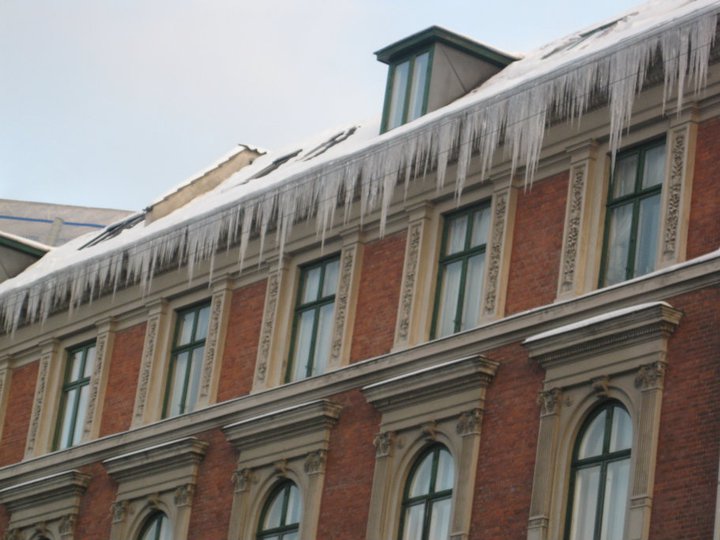
I have 'a thing' for many things: Vesterbro, sunshine with minus temperatures, and icicles. Provided, of course, they stay attached to the rooftops and window awnings from which they glisten. They're beautiful and mean--as Juno MacGuff so perfectly said, 'Like Diana Ross.'


Though I'm not as fond of the glacial masses of ice decorating the streets of Copenhagen as I am of the infinitely more delicate icicles dangling from places on high, I still enjoy appreciating them for what they are. Which is: large chunks of ice.

I like to think I open up on this blog, and reveal things about myself. But some things I will keep private, such as the full story behind this photograph. Suffice to say: this moment was captured at the end of an unbelievably perfect day, in the middle of a meteor shower. Sådan.
Subscribe to:
Posts (Atom)